
Samantha Fellows
in the studio with
Interview by
Sylwia Narbutt
and Monica Perez Vega
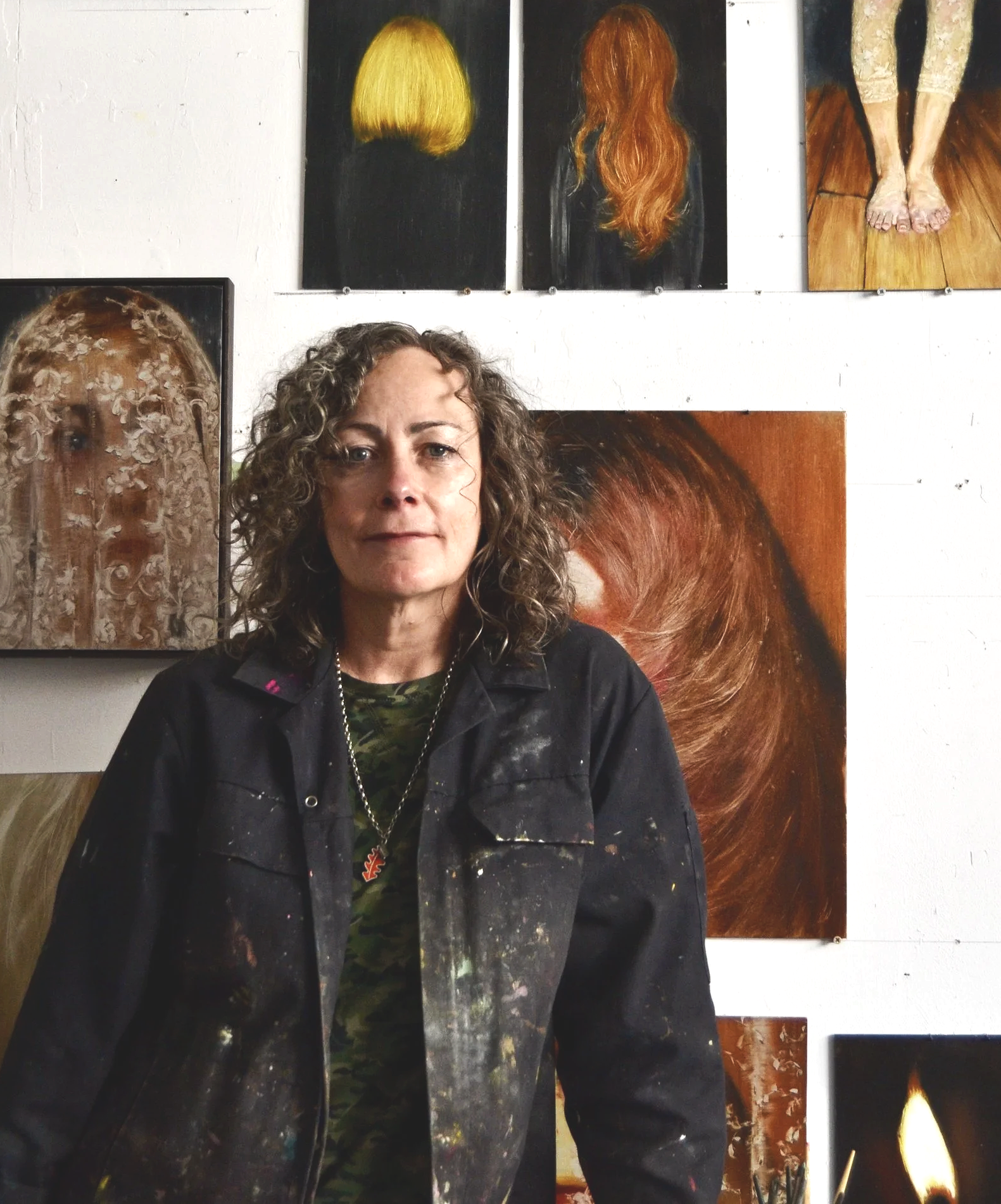
We recently caught up with Brixton-based artist, Samantha Fellows, after our Women’s Day exhibition. She welcomed us into her studio, where we got a glimpse into her practice. Drawing on over 30 years of experience as a scenic painter, Samantha has been steadily reconnecting with a more personal practice, producing work that is now receiving the recognition it richly deserves.
After studying your BFA abroad, what was it like returning to London? Did you find an artistic community here, or when did you eventually find your people?
I found it really hard to connect with an artist community when I returned, largely because I hadn't gone to art school in the UK. For a while, my work as a scenic artist completely took over. I gave up my studio and stopped making paintings for myself altogether.
It wasn't until around 2012 or 2013 that things changed. I started posting drawings on Twitter and interacting with other artists online. Through those conversations and exchanges, I finally felt part of an artist network. It was the first time I felt connected to a wider community of artists.
You built a successful career as a scenic painter. How has that side of your work informed your personal painting practice?
It's given me a very strong work ethic. Scenic painting teaches you discipline—you have to keep going, not spiral, and try not to listen to all the negative nonsense in your head. You just plough on.
It's also given me confidence with paint and colour. It's strange to think that I've been a scenic artist for nearly thirty years now. Even though I spend much of my time running teams and overseeing projects, my working day is still fundamentally about painting, mark-making and colour. I've been doing that almost every day for decades, with only a bit of time off to raise two children.
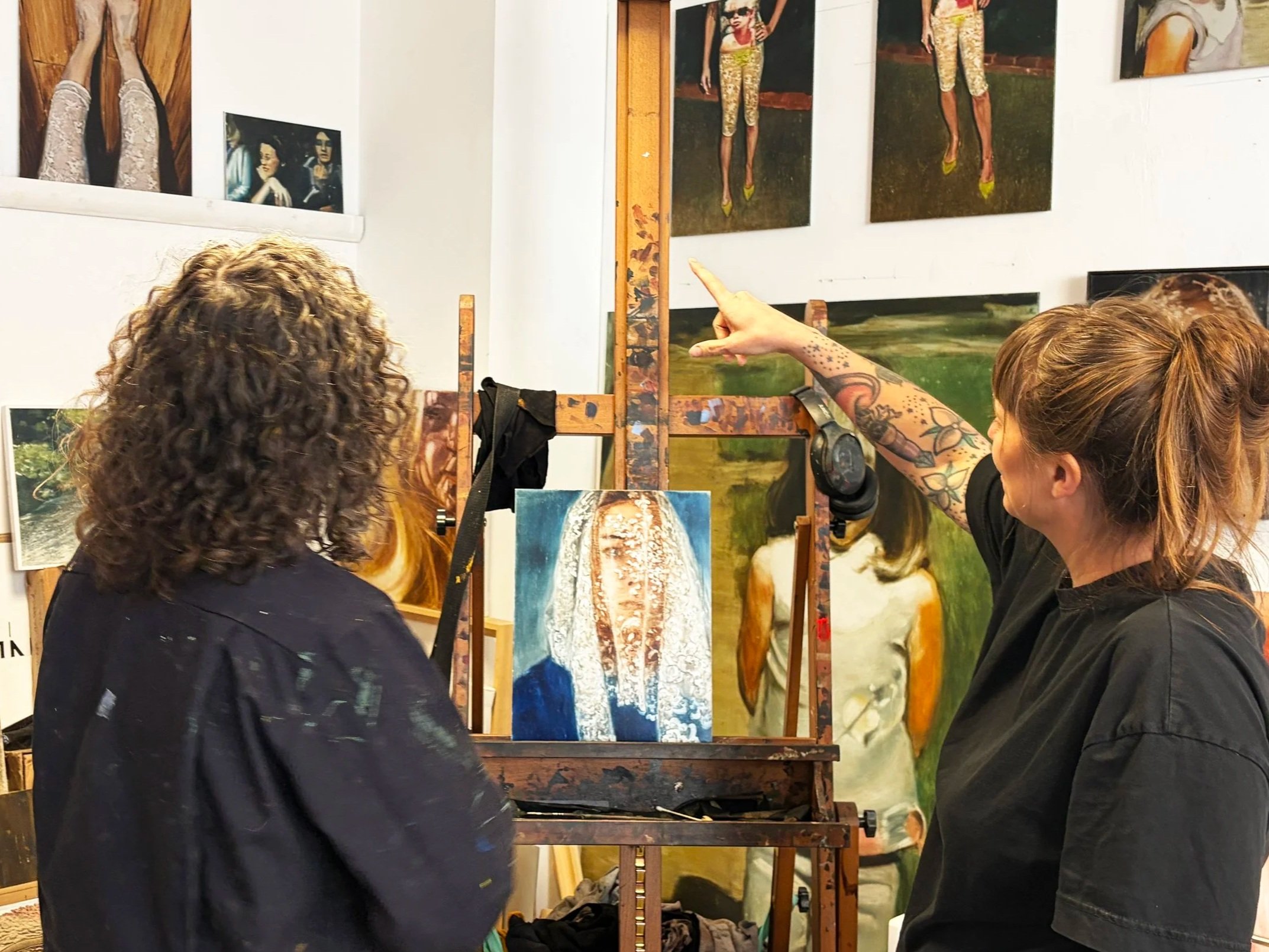
Home videos have become an important source for your paintings. Were these films familiar to you growing up, or were they something you rediscovered later?
The home videos only really became important as references when I started trying to imagine and create possible narratives. I don't actually remember ever watching our family home videos.
My sister and I were part of my father's second family, and there was always talk about the life he had before us, particularly his older daughters in the United States. I became interested in painting my feelings about this imagined life before I was born—New York in the 1960s, for example. The videos became a way into that imagined world.
What draws you to these found videos as source material?
I love the limited palettes and the extraordinary quality of light you often find in old Super 8 films or even 1980s video footage. I'm interested in recreating that photographic quality through layers of colour painted over bright white or silver surfaces.
Most of the time, I don't know the people in the footage, and I don't know the circumstances of the moment I'm painting. I'll often take screenshots on my phone and leave them there for so long that I've forgotten their original context. What interests me is when an image begins to suggest something—a feeling, a mood, or the possibility of a new story.
Are the moments you choose significant in themselves, or is it more about the visual qualities they contain?
What I'm looking for is the point where the painting begins to stand on its own and makes me feel something. That's the goal. Ideally, I want viewers to have a similar experience when they encounter the work. Hopefully, it means something to them, and they enjoy spending time with it.
I've always been interested in presenting something to an audience. I realise not all artists feel that way—many are more concerned with documenting personal experiences or emotions. But I love looking at great paintings, and that's what I'm trying to make: something brilliant for someone else to experience.
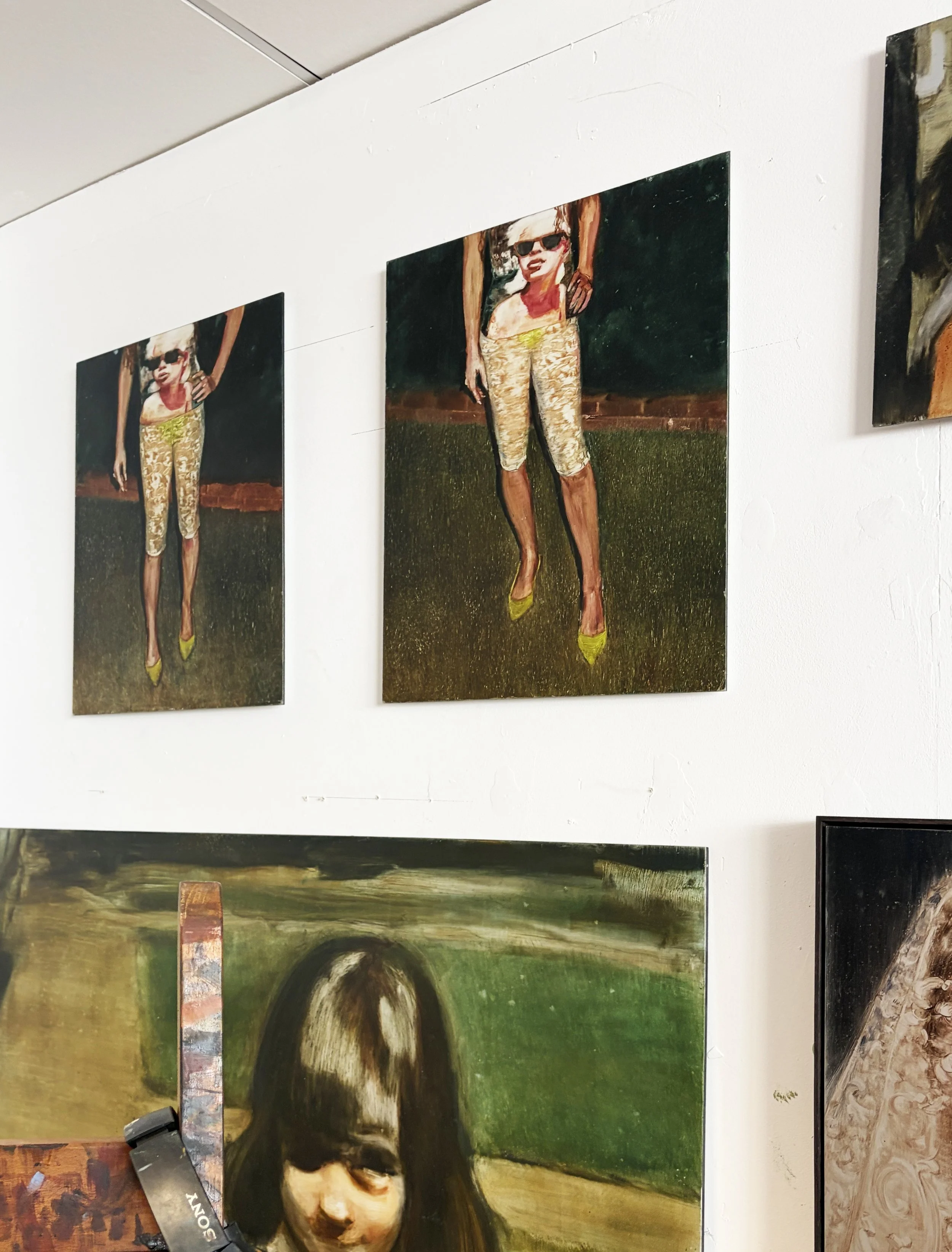
You often use found footage from YouTube and elsewhere. What are you looking for when you search through these videos?
It's usually mood and suggestion rather than anything specific. I'm looking for images that contain the possibility of a story, or that evoke a feeling I can't quite name. The ambiguity is important. The image has to leave room for imagination.
You've described aspects of your work as "slippery." How does that idea connect to memory and the images you paint?
I think it's all much less definite than people sometimes assume, which is why I like the term slippery. I'm also interested in the idea of capture—capturing an image, a suggested narrative, or a suggested memory. It's really just a nudge that encourages someone to feel something.
None of the paintings or references are actually memories of mine. It's more about moving the paint around and seeing what feelings or stories emerge. Often the starting point is simply a screenshot from somebody else's home movie.
“...great paintings often invite viewers to bring something of themselves to the experience.”
-Samantha Fellows
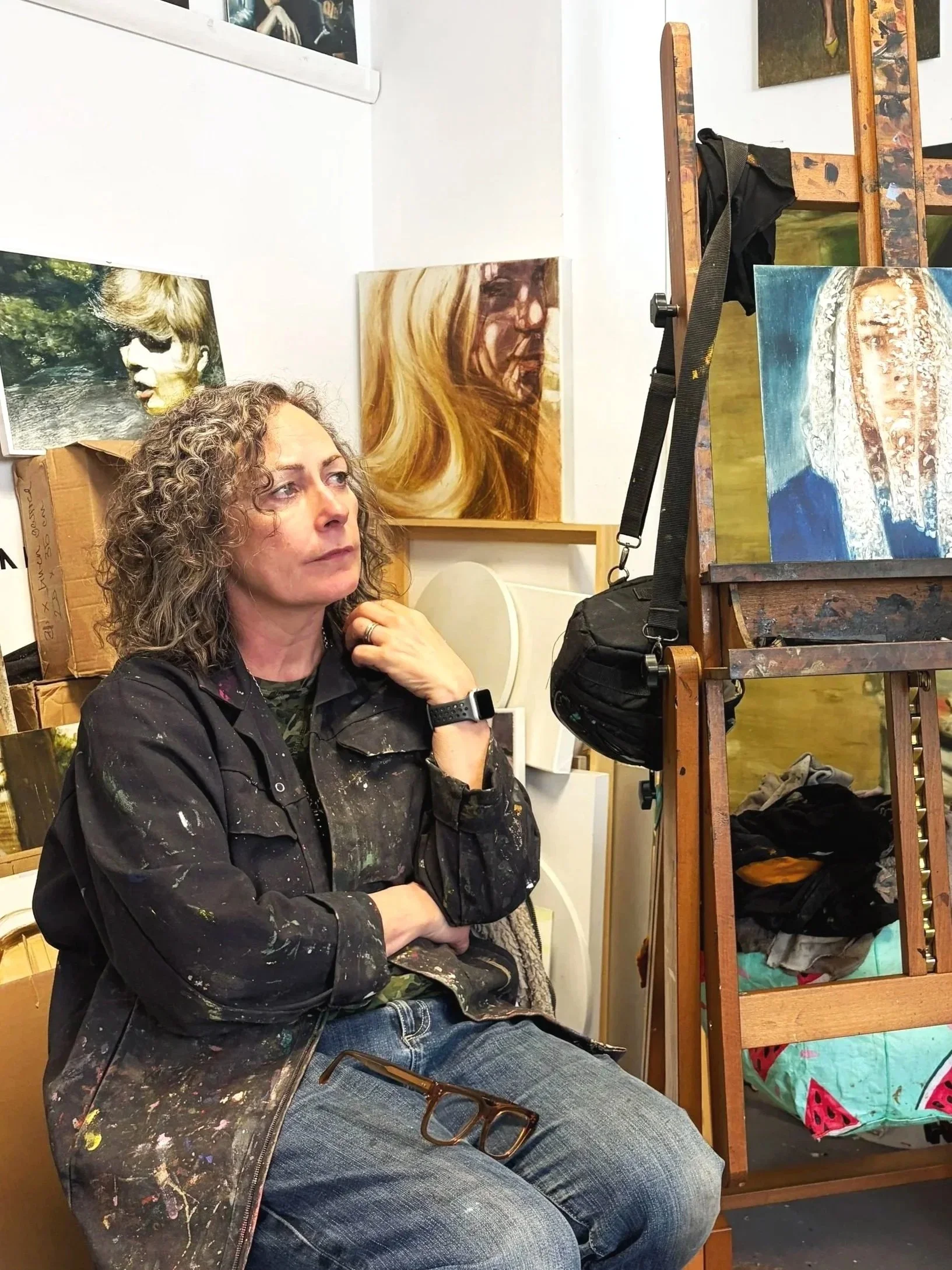
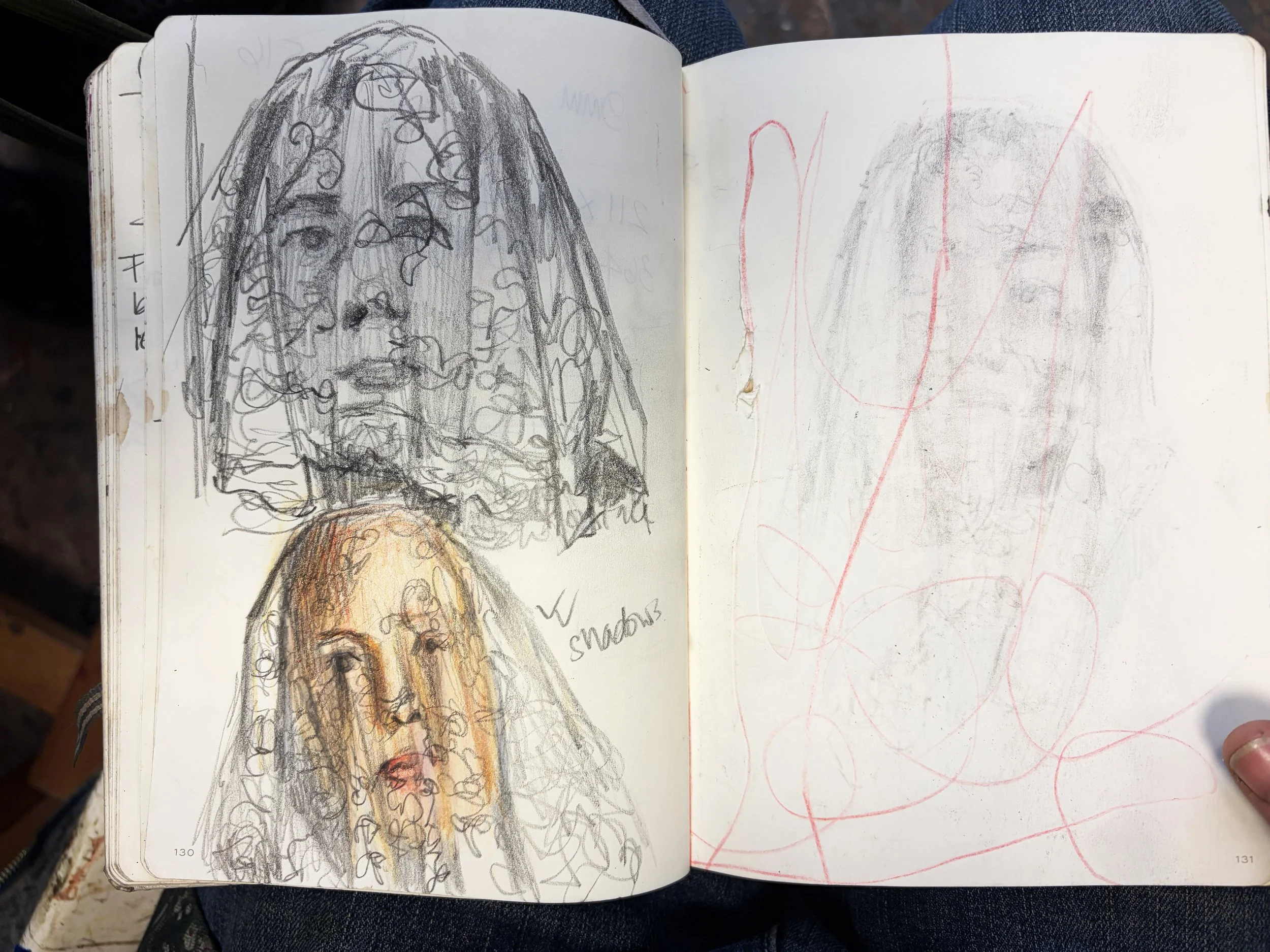
The veil paintings feel especially enigmatic. The expressions of the women seem suspended between anticipation, melancholy and introspection. Is that ambiguity something you're consciously exploring?
Yes, absolutely. I'm really enjoying the veil paintings for precisely those reasons.
I can find it difficult not to overwork or overdefine things, but great paintings often invite viewers to bring something of themselves to the experience. The veils allow me to move between definition and blurriness, backwards and forwards, before letting the painting settle when something interesting begins to appear.
I love that shifting state. It's another way of trying to capture something from the slippery.
Have the veil paintings led you to think about other materials or textures you might explore in future work?
Definitely. I love disrupting the thin film of paint that sits on the slippery surface of the panel. Lace is particularly enjoyable because it allows me to draw back into the paint, but so do many other textures—hair, shimmering water, grass, fur, feathers and countless others.
Was there an artist who had a significant impact on you when you were younger? And whose work excites you today?
I recently loved the Wilhelm Sasnal exhibition at Sadie Coles—it was absolutely brilliant.
I've always loved the history of art. At school and university, it was the painters who interested me most, rather than sculptors or architects. During the years when people were declaring that painting was dead, I appreciated how contemporary art was pushing boundaries. But I also love the fact that painting now feels firmly back at the centre of things.
What would your dream project or exhibition be?
I've never had a solo exhibition, and that's what I'm working towards now. I'm really enjoying the process.
What's exciting is the opportunity to think about a body of work rather than a single painting. Creating a series allows you to hold an audience's attention for longer and build a larger conversation between works.
We'll see how I get on.
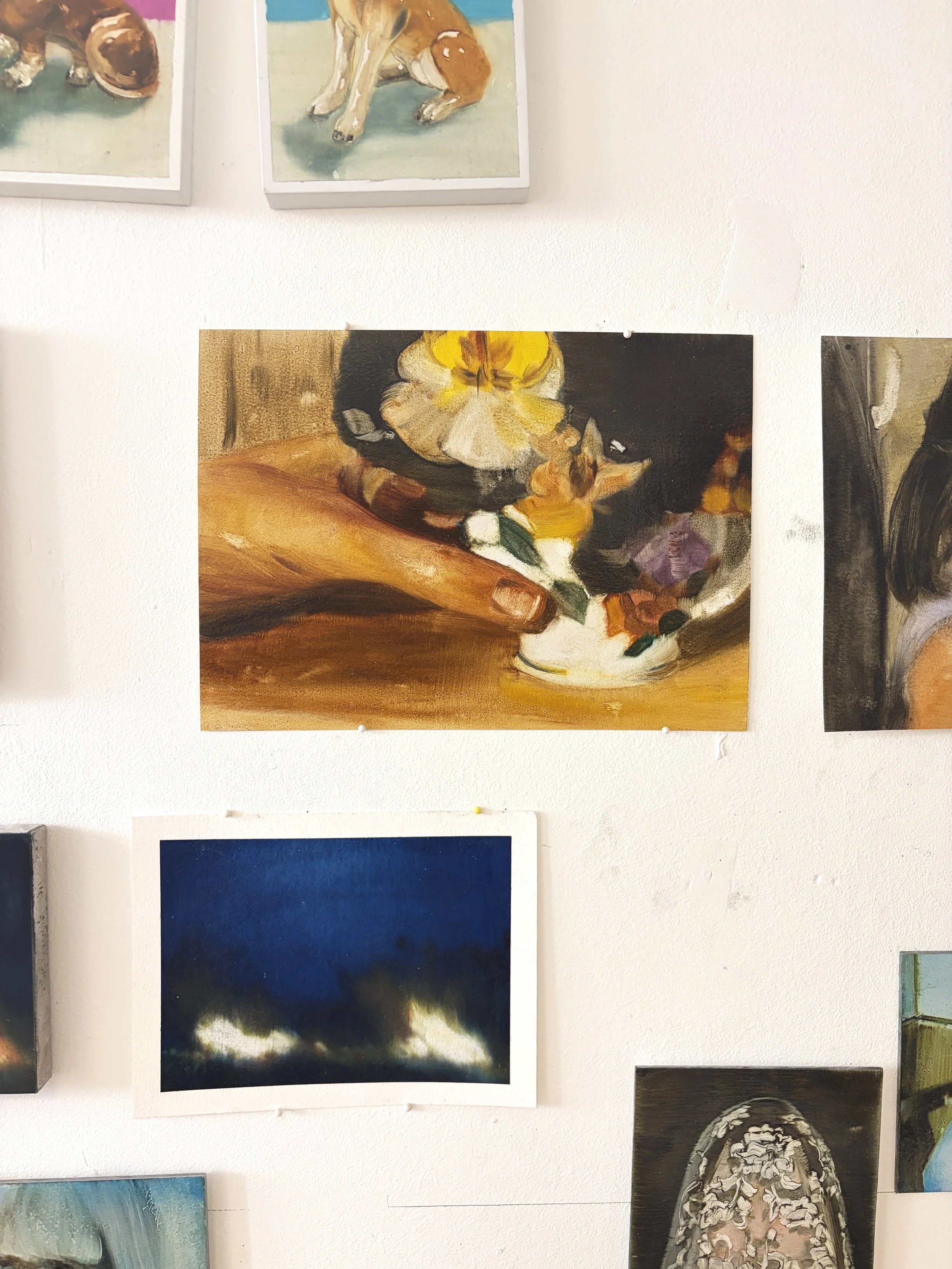
Samantha (b New York) is a London-based artist with a BFA in Fine Art from Oregon State University and recently finished a year with Turps Art School in 2023. Samantha was selected as one of 26 artists to be part of New Contemporaries 2025, and was shortlisted for the John Moores Painting Prize and won the Michael Harding Oil Painting Prize in the Cass Art Prize Exhibition, 2025. Samantha showed twice with curators OHSH Projects in "Pedigree" at The Bottle Factory and previously in “Taste: a taste of the British art scene” with Wönzimer Gallery in Los Angeles. In 2024, she was also longlisted for the Contemporary British Painting Prize and the Beep Painting Prize. She is a member of Contemporary British Portrait Painters.